| The aircraft commander must be notified of the location. |
| | Allowed in hand luggage | |
| | Allowed in checked baggage | |
| | The permission of the carrier(s) is required | |
| FORBIDDEN | Luggage with built-in lithium batteries, non-removable batteries in which the amount of lithium metal exceeds 0.3 gor whose energy consumption exceeds 2.7Wh. | |
| NO | YES | YES | NO | Luggage with built-in lithiumbatteries:
non-removable batteries. Batteries should contain no more than 0.3 g of lithium metal or the energy consumption of lithium-ion batteries shouldbe nomore than 2.7 Wh; removable batteries. The batteries mustbe removedif the baggage is being transported as checked in. The removed batteriesmust be transported in the cabin of the aircraft. | |
| NO | YES | YES | NO | Cylinders with non-flammable non-toxic gas for actuatingartificial limbs. In addition,spare cylinders of similar size,if necessary, to ensuresupplies for the duration of the trip. | |
| YES | YES | YES | YES | Cylinders with gaseous oxygenor air necessary for medicalpurposes. The gross weight of each cylinder shouldnot exceed5 kg. NOTE: It is forbidden to transport devicescontaining liquid oxygen. | |
| NO | YES | NO | NO | Spare batteries, including lithiumbatteries, non-spillable batteries,nickel-metal hydride batteriesand drybatteries for portableelectronic devices allowedfor carriageonly in handluggage. Products called external batteries are considered as sparebatteries. These batteriesmust be protectedseparately in such a way as to avoid the possibility of a short circuit. For lithium-metal batteries, the lithium metalcontent should notexceed 2 g,and the specific powerper watt-hour of lithium-ion batteries shouldnot exceed100 W/h. There can be a maximum of 15 sparebatteries per person. *The carrier may authorizethe transportation of more than 15 batteries. Non–spillable batteries - with a voltage of no more than 12 volts and a capacity of no more than 100 watt-hours. A maximum of two sparebatteries per person is allowed. | |
| NO | YES | NO | YES | Lithium batteries, spare, whose specific powerin watt-hoursexceeds 100 Wh,but does not exceed160 Wh,for portableelectronic devices andportable medical electronicdevices (PMED), orwith a lithium metalcontent of more than 2g, butnot more than 8 g forPMED. Amaximum of two sparebatteries are allowed inhand luggage only.These batteries mustbe individuallyprotected to preventshort circuits. | |
| NO | YES | YES | NO | Lithium batteries: Portable electronicdevices containing lithium-metal or lithium-ioncells, or batteries,including medical devicessuch as portableoxygen concentrators (POC) andhousehold electronic devices suchas cameras,cell phones, laptopsand tablets,when they are carried by passengers or a crewfor personaluse. The lithium metal contentin lithium-metalbatteries should notexceed 2 g,and the specific power of lithium-ion batteries inwatt-hours should notexceed 100 Wh.Devices carried inchecked baggage mustbe completely switched off and protectedfrom damage. Therecan be a maximum of 15 portableelectronic devices perperson. Baggage equipped with a lithium battery other than tablet-type lithiumcells must have a removable battery. Whenchecking in such baggage, the battery must beremoved and transportedin the cabin. * The carriermay authorizethe transportation of more than 15 portableelectronic devices. | |
| NO | YES | YES | YES | Lithium batteries, spare, includingexternal batteries, see Batteries,spare Lithium batteries: Safety equipmentcontaining lithium batteries(seesection 6.3.1.5). | |
| NO | NO | YES | YES | Ammunition securely packed(belonging to Division1.4S, UN 0012 or UN 0014 only), in an amount not exceeding a gross weight of 5kg perperson for personalpurposes. The freight ratesfor severalpersons cannot be combinedinto one ormore cargo spaces. | |
| NO | NO | YES | NO | Internal combustion engines orfuel cell engines should only be carried in checkedbaggage, alone oras part of a machine or otherequipment. | |
| NO | YES | YES | NO | Hair styling toolscontaining hydrocarbon gas, no more than one (1) forcepsper passengeror crewmember, provided that the heating element has a reliable protective hood. Theseforceps should not be used on board an aircraft. Gas refuelingelements for suchforceps are not allowed to be transported either inchecked baggage orin handluggage. | |
| NO | YES | YES | YES | Cartridges (cans)with non-flammable gas,small, containing carbon dioxideor othersimilar gases of Division2.2, but notmore than two smallcartridges per personand notmore than two sparecartridges inserted intoself-inflating rescuedevices such as a life jacket. Nomore than two devicesper passengerand nomore than two sparecartridges per person,no more than four cartridges with a volume of up to 50 mlfor otherdevices. | |
| YES | NO | YES | YES | Wheelchairs/othermobile devices poweredby non-spillable liquidbatteries, nickel-metal hydride batteriesor drybatteries (see clause6.3.1.2). | |
| YES | NO | YES | YES | Wheelchairs or othermobile devices poweredby spill-type batteries(see clause 6.3.1.3). | |
| YES | YES | NO | YES | Wheelchairs and othersimilar devices poweredby lithium-ionbatteries, the design of which does not provide reliableprotection of the battery(s) | |
| NO | YES | YES | NO | Non-radioactive medicines ortoiletries(including aerosols), such ashair sprays, perfumes,colognes and alcohol-containing medicines, and Aerosols of non-flammable, non-toxic Division2.2 withoutadditional danger foruse insports or householdpurposes. The total netamount of non-radioactive medicines ortoiletries and non-flammable, non-toxic (Division 2.2.)aerosols should notexceed 2 kgor 2liters, and the totalnet amount of each individual product shouldnot exceed0.5 kgor 0.5liters. The outlet valves of aerosol cans should beprotected by a cap orother appropriate means in order to prevent spontaneous release of the contents. | |
| NO | YES | YES | NO | Alcoholic beverages in containersintended for retailtrade with a content of more than 24%, butnot more than 70% alcohol byvolume in containers with a capacity of not more than 5 liters, and the total number of suchdrinks per personis 5liters. Note: Alcoholic beveragescontaining 24% orless alcohol byvolume is not subjectto anyrestrictions. | |
| NO | YES | YES | NO | The samples are uninfected, packed in a small amount of flammableliquid, which meet the criteria of special provisionA180 (see clause6.3.4.12). | |
| NO | NO | YES | NO | The permeameters used forcalibration of air qualitycontrol devices must comply with special provision A41(see clause 6.3.4.13). | |
| NO | YES | YES | NO | Portable electronic devices containingnon-spillablebatteries, the batteries mustcomply with the requirements of special regulationA67 and the voltage of each batterymust not exceed12 volts,and the specific powerin watt-hoursmust not exceed100 watts/hour.Two non-removable spare batteries can be carried as much as possible (see6.3.4.11). | |
| NO | YES | YES | YES | Devices for the control of toxic substances, when transported by employees of the Organization for the Prohibition of Chemical Weapons (OPCW)during official trips(see paragraph 6.3.3.4). | |
| NO | YES | YES | YES | A backpack with life-saving equipment, one (1)backpack with life-savingequipment per person,containing compressed gas cylindersof Division2.2, may beequipped with a pyrotechnic trigger mechanismcontaining no more than 200 mg of explosivesubstance of Division 1.4S. The backpack must bepacked in such a waythat the trigger mechanismcannot be accidentallytriggered. The air bagsin thebackpack must beequipped with pressure reliefvalves. | |
| NO | YES | NO | NO | Fuel cell systemscontaining fuel used topower portable electronicdevices (for example,cameras, cell phones,laptops) are described in detail insection 6.3.4.9. | |
| NO | YES | YES | NO | Fuel cell cartridges,spare cartridges used to powerportable electronic devices, seesection 6.3.4.9 formore information. | |
| NO | WITH YOU | NO | Safe matches (onesmall package) or a small cigarette lighter that does not contain unabsorbedliquid fuel, with the exception of liquefied gas, intendedfor individualuse andcarried by an individual. It is not allowed to carry fuel forlighters and refuelingelements either withoneself or inchecked baggage orhand luggage. NOTE:Transportation of “thermal matches”, “blueflame” or “cigarlighters” or lighterspowered by lithiumbatteries that are not equipped with protective covers ormeans to prevent accidentalactivation is notallowed either withoneself or inchecked baggage orhand luggage. | |
| NO | WITH YOU | NO | Cardiac muscle stimulators(pacemakers)or otherdevices based on radioactiveisotopes, including devicespowered by lithiumbatteries, implanted in the human body ormounted on the outside. | |
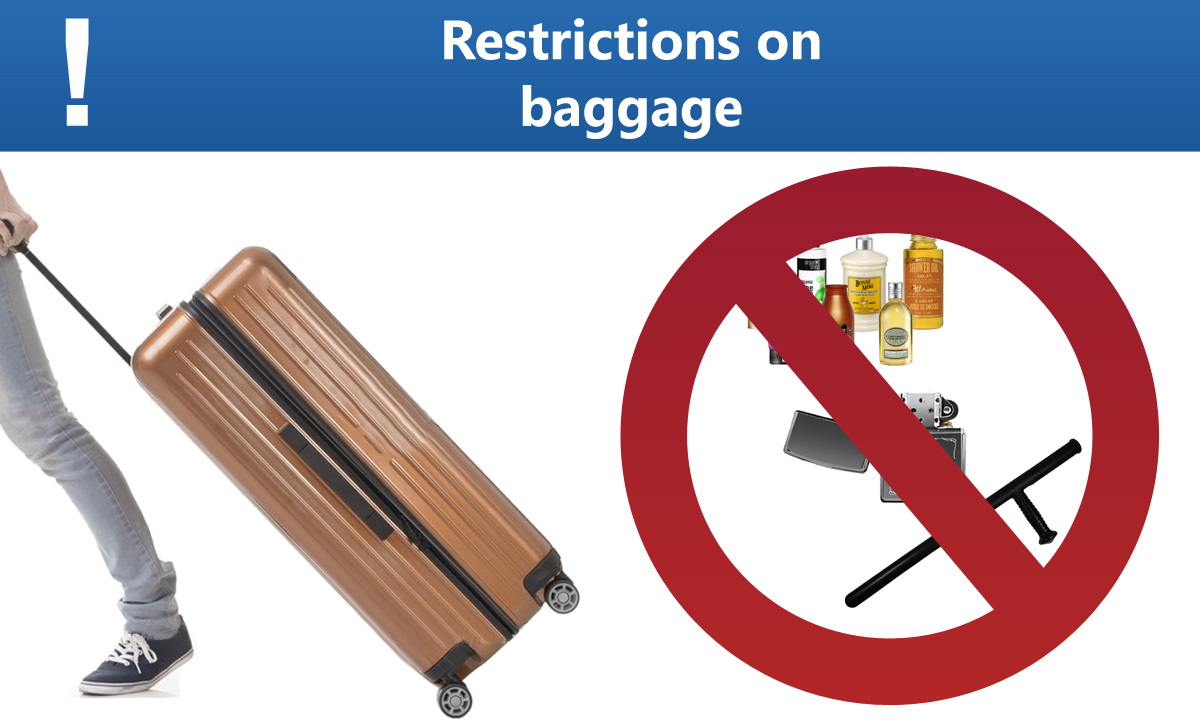
| FORBIDDEN | Self-defense equipment, such asgas canisters,pepper sprays, etc.,containing an irritating or disablingsubstance, is prohibited to be carried withoneself, as well asin luggageand handluggage. | |
| FORBIDDEN | Electroshock devices(for example, stun guns, electric shock cartridges)containing dangerous goods such as explosives, compressed gases, lithiumbatteries, etc. areprohibited to be transported in handluggage, checked baggage,or withoneself. | |
| NO | NO | YES | NO | A medical orclinical thermometer containing mercury, one(1) perperson, for personaluse ifit isin a protective case. | |
| YES | YES | NO | YES | A mercury thermometeror barometercarried by a representative of the government weather bureauor a similar officialbody (see section6.3.2.1 for details). | |
| NO | NO | YES | YES | Tourist tiles andfuel cans fortourist tiles containingflammable liquid fuel, provided that the fuel tanks of touristtiles and/or fuelcans have been completelydrained (see section6.3.1.6 for details). | |
| NO | YES | YES | YES | Carbon dioxide is solid (dryice), in an amountnot exceeding2.5 kgper personwhen used forcooling perishable products carriedin checkedbaggage or handluggage, which are notsubject to these Rules,provided that the baggage(cargo) space allows the release of carbon dioxide gas. The luggagespace must be marked “dry ice” or “carbon dioxide, solid”,as well as the value of the net weight of dry ice or a mark stating that the net weight is2.5 kgor less. | |
| NO | YES | YES | NO | Insulated packages containingrefrigerated liquid nitrogen(dry shipper) completelyabsorbed by porous material,containing only non-dangerousgoods. | |
| FORBIDDEN | Security devices suchas attachécases, boxes andbags for storingcash, etc.,containing dangerous goods,such as lithium batteriesand/or pyrotechnic substances, excluding productspermitted under clauses6.3.1.5 and 6.2.1, are completely prohibited. | |
| NO | YES | YES | YES | Electronic devices poweredby lithiumbatteries.Lithium-ion batteries forportable (including medical) electronicdevices with a specificpower exceeding 100watts/hour, but notexceeding 160 watts/hour. Only for portablemedical electronic devices, lithium-metalbatteries with a lithiummetal content of more than 2g, butnot more than 8 g. Devicescarried in checkedbaggage must becompletely switched off andprotected from damage. | |
| NO | YES | NO | NO | Electronic cigarettes (including electronic cigars, pipes, and other vaporizers for personaluse) containing batteries thatmust be protectedto preventaccidental activation | |
 ENG
ENG  РУС
РУС
 O'Z
O'Z